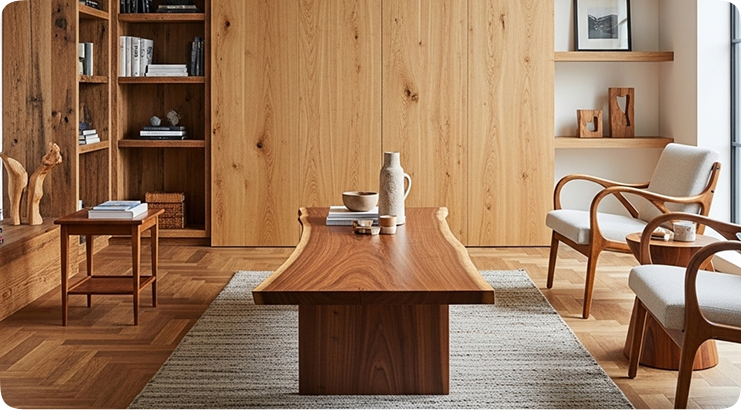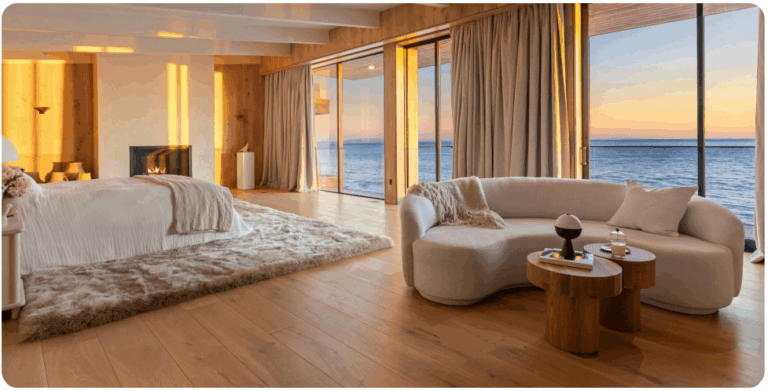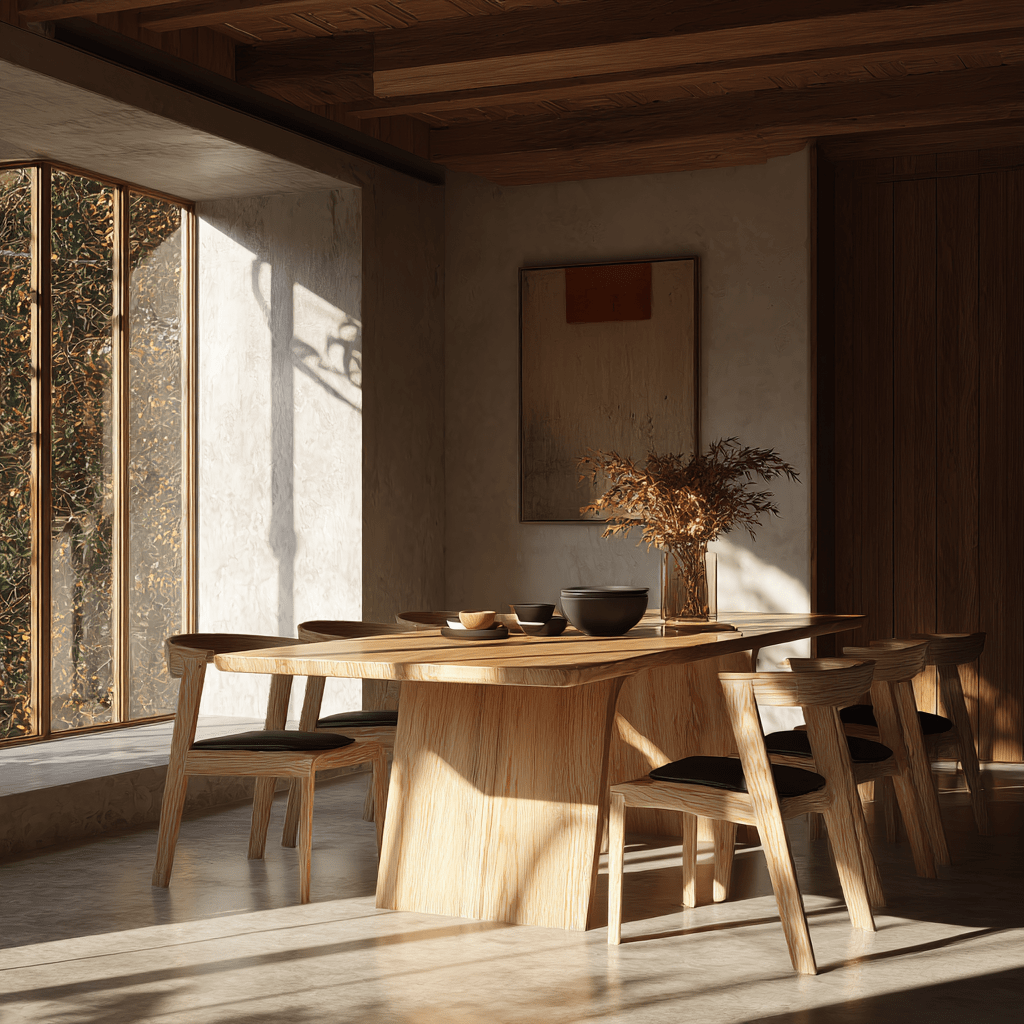

Living near the sea has an unmatched charm: fresh breeze, stunning landscapes, and a relaxed lifestyle. However, coastal climates also bring an important challenge — humidity, salinity, and solar radiation directly affect the durability of furniture. In this article, we’ll show you how to choose the best types of wood for furniture in coastal climates, ensuring resistance, aesthetics, and long-lasting performance.
The Challenges of Coastal Climate
Before choosing materials, it’s essential to understand the environment:
- High humidity: promotes swelling and warping of the wood.
- Salt exposure: corrodes finishes and accelerates wear.
- Intense sunlight: causes discoloration and dryness in the fibers.
For these reasons, not all woods are suitable for this kind of environment.
Best Types of Wood for Marine Environments
1. Teak
- Key advantage: contains natural oils that make it resistant to moisture and insects.
- Ideal use: outdoor furniture such as tables, benches, and loungers.
- Durability: can last for decades even in harsh conditions.
2. Cedar
- Key advantage: naturally aromatic and pest-repellent, with excellent moisture resistance.
- Ideal use: closets, doors, and indoor furniture.
- Aesthetics: warm tones that remain stable over time.
3. Mahogany
- Key advantage: hardness and dimensional stability against salinity.
- Ideal use: tables, chairs, and decorative finishes.
- Aesthetics: luxurious, elegant finish perfect for refined interiors.
4. Ipe (Lapacho)
- Key advantage: extremely dense and resistant to sun and water.
- Ideal use: decks, pergolas, and exposed outdoor furniture.
- Durability: one of the longest-lasting woods under coastal conditions.
Essential Finishes and Treatments
Choosing the right wood is the first step; protecting it is equally important.
- Marine sealers: create a barrier against moisture and salt.
- Protective oils: maintain fiber flexibility and prevent cracking.
- UV-filter varnishes: prevent discoloration from sun exposure.
- Regular maintenance: wipe with damp cloths and reapply finishes every 12–18 months.
Practical Tips When Buying Coastal Furniture
- Choose FSC-certified woods to ensure sustainability.
- Check that joints are made of stainless steel or brass to prevent corrosion.
- For semi-open spaces, select ventilated designs that allow airflow.
- Consider protective covers to extend furniture lifespan during rainy seasons.
Conclusion
Choosing the right wood for furniture in coastal climates is not just about aesthetics but also durability and functionality. Opting for resilient species such as teak, cedar, mahogany, or ipe—along with proper protective finishes—ensures your investment remains in perfect condition for years to come.
At WoodWorks, we combine craftsmanship with modern techniques to create furniture designed to withstand the marine environment without losing elegance.